
About: In a world where AI technology is reshaping how we interact, create, and secure data, the stakes for authenticity and trust have never been higher. With the advent of deep fakes and the ease of document manipulation, it’s crucial for businesses to partner with experts who understand not only how to detect these forgeries but also how to anticipate the evolving strategies of fraudsters.
Why document fraud is proliferating: modern threats and evolving attack vectors
Document fraud has moved beyond crude photocopy alterations to a sophisticated, digitally enabled ecosystem. Attackers now exploit accessible editing tools, generative AI, and networked marketplaces to create near-perfect counterfeit IDs, credentials, contracts, and certificates. The spectrum of threats includes scanned image alteration, synthetic identity creation, tampering with PDF metadata, template-based forgery, and the use of AI to generate believable textual or visual content that mimics genuine documents.
The rapid growth in remote onboarding and digital transactions has expanded the attack surface. Organizations that once relied on in-person visual checks now accept digital uploads, making it easier for fraudsters to submit manipulated content at scale. Deep learning models can produce photorealistic face swaps and fabricate supporting documents that pass casual inspection. Concurrently, bad actors test and iterate on countermeasures, learning how to evade basic validation routines by mimicking sensor noise, compression artifacts, or expected metadata patterns.
Adding to the challenge, different industries face unique pressures: financial institutions must verify identity to meet KYC and AML rules, healthcare providers must protect patient records and prescriptions, and government agencies must ensure the legitimacy of passports and licenses. Each context demands tailored detection approaches. Effective defenses require a combination of document-specific forensics, behavior analysis, and an understanding of how adversaries blend human and machine-generated elements to defeat controls.
Technologies and techniques driving effective document fraud detection
Combating modern forgery blends traditional forensic methods with advanced AI-driven analytics. Optical Character Recognition (OCR) and template matching remain foundational for extracting and validating textual elements against known formats. Metadata analysis and cryptographic checks help expose manipulated files by revealing inconsistencies in creation timestamps, embedded fonts, or signing certificates. Image forensics analyze pixel-level anomalies, resampling artifacts, and noise patterns to detect tampering or generative content signatures.
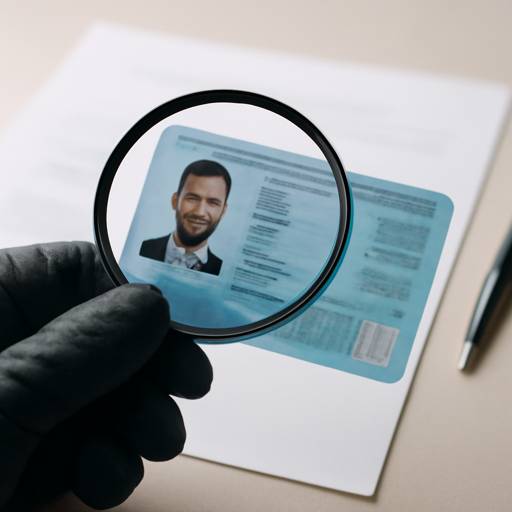
Machine learning models trained on large, diverse datasets can flag suspicious patterns that human reviewers might miss. These models evaluate visual features, layout consistency, and semantic relationships between fields (for example, age vs. birthdate plausibility). Behavioral signals—such as upload speed, device fingerprinting, and geolocation patterns—add another verification layer. Combining multiple signals into a risk score enables a layered defense that scales with transaction volume while keeping false positives manageable.
Specialized solutions and platforms integrate these capabilities into workflows for automated screening and escalation. For high-assurance needs, multi-factor verification that pairs document checks with biometric matching or live liveness checks closes critical gaps. Organizations seeking turnkey tools often deploy enterprise-grade systems built for regulatory compliance, fraud analytics, and audit trails. For practical implementation and vendor selection, teams should evaluate detection accuracy, model retraining pipelines, integration APIs, and how providers handle adversarial examples. Where appropriate, consider leveraging document fraud detection technology that unifies image forensics, OCR validation, and behavioral risk assessment into a single operational stack.
Case studies and best practices: building resilient verification programs
Real-world examples illustrate what works. A regional bank facing a surge in synthetic identities consolidated document checks with biometric verification and saw fraudulent account openings drop dramatically. The bank combined automated OCR validation, image forensics, and velocity checks (multiple accounts created from the same device) to detect coordinated attempts. Similarly, a healthcare provider prevented prescription fraud by implementing document authenticity checks plus clinician identity verification, catching forged refill requests that used altered letterhead and mismatched metadata.
Best practices center on adopting a multi-layered strategy. Start with robust intake controls: require high-resolution images, standardized upload flows, and automatic metadata capture. Layer automated analytics—OCR, layout validation, and image-level forensics—before routing suspicious cases to specialized reviewers. Integrate behavioral signals such as device risk, IP reputation, and user history to contextualize document anomalies. Continuous monitoring and model retraining are essential; as fraudsters adapt, static rules become obsolete. Regularly update training datasets with confirmed fraud examples to improve detection sensitivity.
Organizationally, invest in cross-functional collaboration between compliance, security, and operations teams. Maintain clear escalation paths for suspected fraud, retain immutable logs for audits, and align detection workflows with legal and privacy requirements. Conduct red-teaming exercises to simulate attacks and reveal blind spots. Training frontline staff to recognize subtle cues—poor print quality, inconsistent terminology, or mismatched seals—complements automated systems and builds institutional knowledge. With these practices, businesses can stay ahead of sophisticated forgery techniques and protect trust across digital and physical document lifecycles.

Lisbon-born chemist who found her calling demystifying ingredients in everything from skincare serums to space rocket fuels. Artie’s articles mix nerdy depth with playful analogies (“retinol is skincare’s personal trainer”). She recharges by doing capoeira and illustrating comic strips about her mischievous lab hamster, Dalton.